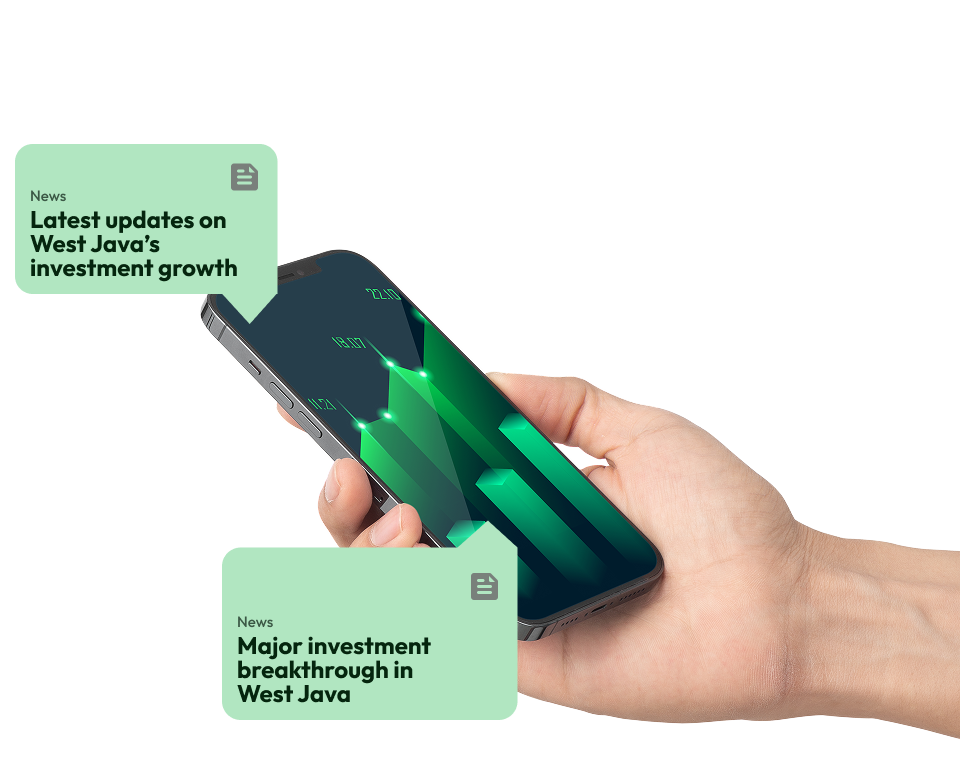
The Majalengka Regency Government in West Java is preparing to develop a new industrial estate in Sumberjaya District. The project is currently in the final stages of the permitting process as part of the regency's efforts to strengthen investment and create more employment opportunities. Speaking in Majalengka on Tuesday, Deputy Regent Dena Muhamad Ramdhan said the new industrial estate is expected to become a new engine of regional economic growth, complementing the existing Majalengka Industrial Estate (KIEM) in Kertajati. "We are optimistic that the Sumberjaya industrial estate will soon secure all the necessary permits, allowing construction to begin. The project is expected to generate employment, stimulate economic growth, and help reduce poverty and unemployment in Majalengka," he said. He explained that the project has not yet entered the construction phase because several regulatory requirements remain unresolved, particularly those related to protected agricultural land and spatial planning. According to Dena, the local government continues to coordinate with relevant stakeholders, including the Ministry of Agrarian Affairs and Spatial Planning/National Land Agency (ATR/BPN), to accelerate the completion of the Detailed Spatial Plan (RDTR). He noted that regulatory certainty in spatial planning is essential to provide investors with confidence and legal certainty when implementing their investment plans in Majalengka. In addition to developing the new industrial estate, the regency government continues to enhance the quality of its workforce through various vocational training programs. One of the flagship initiatives is the Mata Hati program at the Cakraningrat Job Training Center, which successfully placed approximately 2,100 participants into employment as of May 2026. "We want investors to feel confident about investing in Majalengka because greater investment will create more employment opportunities for our communities," Dena said. Previously, Majalengka was identified as one of the key regencies within West Java's Rebana Metropolitan area, which has demonstrated strong investment growth in recent years. According to data published by the Rebana Metropolitan Management Agency, total investment realized across the Rebana region reached Rp6.49 trillion during the first quarter of 2026. The same data show that Majalengka recorded approximately Rp996 billion in investment realization, outperforming Indramayu Regency, which attracted around Rp993 billion, and Kuningan Regency, which secured Rp506 billion. [SOURCE]
Jul, 01 2026
Majalengka Regency has further strengthened its position as one of West Java's emerging economic growth centers. Between 2023 and 2025, the regency attracted Rp5.65 trillion (approximately US$350 million) in foreign direct investment (FDI), accounting for nearly 46 percent of the total foreign investment realized across the Ciayumajakuning region. According to data from Statistics Indonesia (BPS) West Java, total FDI flowing into the Ciayumajakuning region—which comprises Cirebon Regency, Cirebon City, Indramayu Regency, Kuningan Regency, and Majalengka Regency—reached Rp12.34 trillion over the past three years. Of that amount, Majalengka recorded the largest share of foreign investment among all regencies and cities in the region. "Alhamdulillah," said Majalengka Regent Eman Suherman on Wednesday (July 1, 2026). Meanwhile, Head of BPS West Java Margaretha Ari Anggorowati stated that the strong investment inflows demonstrate Majalengka's growing prominence as a strategic investment destination in West Java. "The increasing volume of investment is a positive signal that the region possesses strong economic appeal. Continuous infrastructure development and its strategic location have become key factors in attracting foreign capital," Margaretha said. Majalengka's investment dominance is closely linked to the presence of Kertajati International Airport (BIJB), direct access to the Cipali Toll Road, and the continued expansion of its industrial estates. This combination of infrastructure provides investors with efficient logistics, improved connectivity, and broader access to domestic and international markets. The regency has also posted impressive economic performance. In 2025, Majalengka's economy expanded by 6.86 percent, surpassing West Java's average economic growth rate. The manufacturing sector remained one of the primary drivers of this strong economic growth. "The dominance of foreign investment further reinforces Majalengka's position as one of the new economic growth epicenters in eastern West Java," Margaretha added. Cirebon Regency ranked second, recording Rp4.38 trillion in foreign direct investment. Combined, Majalengka and Cirebon Regency accounted for more than 81 percent of the total FDI realized across the Ciayumajakuning region. Meanwhile, Indramayu Regency has also shown positive momentum, attracting Rp1.43 trillion in foreign investment during the same period. For Majalengka, securing Rp5.65 trillion in foreign investment marks a significant milestone, reflecting its transformation from a predominantly agricultural region into one of the new engines of economic growth in eastern West Java. [SOURCE]
Jul, 01 2026
The West Java Provincial Government is accelerating efforts to strengthen the province's investment ecosystem by improving infrastructure connectivity, enhancing the quality of human resources, and encouraging businesses to play a greater role in supporting regional economic growth. The commitment was reaffirmed by West Java Governor Dedi Mulyadi during the inauguration of the 2026–2031 Executive Board of the West Java chapter of the Indonesian Employers Association (APINDO) in Bandung on Friday (June 26, 2026). Dedi emphasized that the development of industrial estates must be supported by integrated infrastructure with direct access to seaports. According to him, seamless connectivity between toll roads, national roads, provincial roads, and district roads is essential to strengthening the competitiveness of West Java's industrial sector. "We want to connect our entire road network to the ports. If we have industrial estates without supporting port infrastructure, export activities will continue to depend on ports in other provinces. As a result, the value of our products will be recorded as originating from other regions rather than from West Java," Dedi said. In addition to strengthening logistics connectivity, Dedi urged companies operating in West Java to register their Taxpayer Identification Numbers (NPWP) in the province so that regional tax revenues can increase and the economic benefits can be returned to local communities. He noted that businesses have long benefited from various public services and facilities provided by the provincial government, including infrastructure, public services, and security. "Tax contributions should also return to West Java so they can support regional development and improve the welfare of our communities," he stressed. Dedi further emphasized that the economic benefits generated by industrial activities should reach rural communities, ensuring that industrial growth contributes directly to the development of surrounding areas. To support industrial utilities, the provincial government is preparing to develop a raw water supply network for industrial estates to reduce dependence on groundwater extraction. Water demand will be supplied from sources such as the Citarum River and the Jatigede Reservoir. The government is also accelerating the expansion of digital infrastructure to facilitate the transformation of industrial estates into more modern, efficient, and competitive economic zones. In the labor sector, Dedi aims to develop a highly skilled workforce by strengthening vocational education. The provincial government plans to increase the proportion of industrial training relative to classroom-based instruction, particularly during students' final year of study. "Students who have gained practical industrial experience will be better prepared to enter the workforce immediately after graduation, helping to reduce unemployment," he said. Meanwhile, Ning Wahyu Astutik, Chair of the West Java APINDO Executive Board for the 2026–2031 term, stated that the organization would prioritize job creation by attracting more investment despite ongoing global economic challenges. According to Ning, West Java remains one of Indonesia's leading investment destinations due to its large labor force, extensive land availability, and the provincial government's commitment to creating a business-friendly environment. "I want to ensure that employment opportunities continue to grow through new investment in West Java. Despite the ongoing uncertainties in the global economy, West Java remains an attractive destination for investors," she said. The West Java APINDO will also strengthen its organizational network at the regency and municipal levels to become a more effective strategic partner for local governments in promoting regional economic growth and investment. At the same time, Ning acknowledged that businesses continue to face risks stemming from the global economic slowdown, which could potentially lead to workforce reductions. Declining export demand, particularly from the United States and the Middle East, has begun to put pressure on labor-intensive industries such as textiles, garments, and footwear manufacturing. Nevertheless, she expressed confidence that close collaboration between the provincial government and the business community would preserve a favorable investment climate, support existing industries, and attract new investments, allowing West Java to maintain its role as one of Indonesia's primary engines of economic growth. [SOURCE]
Jun, 30 2026
DPRD has called for a more balanced distribution of investment across the province, warning against excessive concentration in a handful of regions, despite West Java's investment realization in 2025 nearing Rp300 trillion. Chair of Commission III of the West Java DPRD, Jajang Rohana, said the impressive achievement must be maintained, but its benefits should be shared more equitably among districts and cities. Speaking in Bandung on Sunday, Jajang emphasized that exceeding the provincial investment target should not lead to complacency. Instead, he said the next priority is to ensure that incoming investments contribute to balanced regional development rather than simply boosting annual investment figures. According to Jajang, sustaining investment growth depends on three key factors: streamlined licensing procedures, legal certainty, and a stable business climate. These elements, he noted, play a crucial role in determining whether investors remain committed to West Java or choose to relocate their investments to regions perceived as more investment-ready. "To ensure investment does not decline, we must continue improving the ease of doing business, strengthen legal certainty, and maintain a conducive investment climate," Jajang said. He also stressed the importance of improving infrastructure and workforce quality. Both factors, he explained, are decisive considerations for investors, particularly in manufacturing industries that rely on efficient supply chains and skilled labor. Without adequate transportation networks, logistics, and human resources, investment is likely to remain concentrated in already-developed areas. "We must also continue enhancing infrastructure and workforce capacity," he added. Jajang stated that West Java's investment realization in 2025 had exceeded the provincial government's target, reaching nearly Rp300 trillion. According to him, this achievement has contributed to stronger economic growth compared to 2024. "In terms of investment, we have surpassed the target, and this has helped drive higher economic growth than in 2024," he said. For the business community, the strong investment performance signals that West Java remains one of Indonesia's most attractive investment destinations. For local communities, the benefits are expected to be reflected in increased employment opportunities, more vibrant industrial activities, and greater demand in supporting sectors such as trade, transportation, and logistics services. However, Jajang cautioned that economic growth should not remain concentrated in regions that have traditionally attracted the majority of investments. If capital continues to flow disproportionately into a limited number of areas, regional disparities could persist, leaving less-developed regions behind in terms of employment opportunities, business development, and public infrastructure. He explained that the manufacturing sector continues to serve as the backbone of West Java's economy, with industries such as automotive, electronics, and textiles making significant contributions to regional economic activity. Beyond manufacturing, infrastructure and transportation, wholesale trade, construction, and agriculture also play important roles in supporting the province's economic resilience, reinforcing West Java's position as one of Indonesia's leading economic hubs. Nevertheless, Jajang argued that strong economic growth alone is insufficient if its benefits are unevenly distributed. Investment concentrated in a few industrial centers risks widening development gaps by limiting employment opportunities, small business growth, and public service improvements in other regions. For this reason, the West Java DPRD is encouraging the provincial government to expand investment into a broader range of districts and municipalities. The objective is to ensure that economic growth reaches regions that have historically received a smaller share of investment. In a separate statement, Deputy Chair of Commission III of the West Java DPRD, M. Romli, also called for greater investment in the Rebana Metropolitan Area, which comprises the regencies and municipalities of Cirebon, Indramayu, Majalengka, Kuningan, Subang, and Sumedang. He believes the region has the potential to become a new engine of economic growth capable of reducing development disparities with the Greater Jakarta metropolitan area. According to Romli, the Rebana region recorded approximately Rp36.68 trillion in investment in 2025. During the first quarter of 2026, through April, investment realization reached Rp6.5 trillion, accounting for 8.43 percent of West Java's total investment. He said these figures demonstrate growing investor confidence in the Rebana region, supported by ongoing infrastructure development and the expansion of industrial estates. Romli also highlighted the West Java DPRD's commitment to promoting green industrial development in Majalengka, leveraging the presence of Kertajati International Airport. "We are encouraging other regions, including Majalengka within the Rebana Metropolitan Area, to develop as green industrial zones while promoting a more balanced distribution of industrial growth across West Java," Romli said. Romli emphasized that the provincial legislature is not solely focused on achieving investment targets. More importantly, he said, the goal is to generate tangible economic benefits through lower unemployment, broader employment opportunities, and more equitable regional development. To achieve this, the DPRD continues to strengthen communication with prospective investors while promoting regional investment potential and improving infrastructure accessibility. The message from the West Java DPRD is clear: attracting substantial investment remains important, but ensuring its equitable distribution across the province is even more critical. Without a balanced flow of investment, the province risks widening regional disparities despite recording nearly Rp300 trillion in investment realization. [SOURCE]
Jun, 30 2026
Kuningan Regent Dian Rachmat Yanuar has confirmed that a planned Rp1.2 trillion investment by a South Korean company will soon be realized in Kuningan Regency, West Java, as part of the region's industrial estate development. Speaking in Kuningan on Monday, Dian said the regional government is currently facilitating various preparatory stages to ensure the project can move into the construction phase as soon as possible. He explained that the investor plans to build a footwear manufacturing plant in the districts of Jalaksana and Japara, requiring approximately 22 hectares of land. "Our priority is to ensure that this investment stimulates the local economy and creates broader employment opportunities for the community," he said. According to Dian, the establishment of a new manufacturing industry will add significant value to Kuningan Regency's economic structure, which has long been dominated by the agricultural, trade, and service sectors. He noted that manufacturing activities would generate demand across a wide range of supporting industries, allowing the economic benefits to extend beyond the company itself to local businesses. "We hope this project will create new business opportunities and enable more residents to enter the workforce," he added. The regional government, Dian said, remains committed to fostering a conducive investment climate by accelerating licensing services and providing the necessary infrastructure support. In addition, the regency administration continues to maintain close communication with the investor to ensure the investment is implemented according to schedule while providing greater certainty for the business community. Dian expressed confidence that the arrival of this large-scale investment would strengthen investor confidence and encourage other businesses to invest in Kuningan Regency. He added that the new industrial facility is expected to stimulate the growth of supporting businesses in logistics, transportation, raw material supply, accommodation, and the micro, small, and medium-sized enterprise (MSME) sector. "This investment is expected to become one of the key drivers of new economic growth while strengthening Kuningan Regency's competitiveness as an investment destination in eastern West Java," he said. [SOURCE]
Jun, 30 2026
Investment realization in Subang Regency, West Java, has experienced remarkable growth over the past several years. According to the local Investment and One-Stop Integrated Services Agency (DPMPTSP), total investment inflows between 2022 and 2025 reached an impressive Rp18.2 trillion. Head of DPMPTSP Subang, Dikdik Solihin, stated that the achievement exceeded the investment target set by the West Java Provincial Government. “The provincial investment target for Subang was Rp10.5 trillion, and we successfully surpassed it,” he said on the sidelines of the Subang Investment Forum 2026 held in Subang on Wednesday. According to Dikdik, the significant increase in investment was driven by the presence of several strategically located industrial estates in Subang. In addition, the region’s extensive infrastructure development has played a key role in attracting investors to establish and expand their businesses in the regency. The Subang Regency Government continues to foster a conducive investment climate. One of the strategic measures currently being prepared is the issuance of a regional regulation aimed at facilitating investment. The regulation is expected to further streamline business processes and improve ease of doing business for investors. Subang Regent Reynaldy Putra reaffirmed his administration’s commitment to ensuring a secure and comfortable environment for investors. “We are committed to guaranteeing safety and convenience for investors who choose to invest in Subang,” he emphasized. Reynaldy added that while the regency is actively encouraging investment, it remains committed to preserving Subang’s identity as one of Indonesia’s key rice-producing regions. He stressed that industrial development would go hand in hand with efforts to strengthen the agricultural sector. The presence of Patimban Port has been regarded as a major catalyst for the development of modern industrial zones in Subang. This strategic infrastructure enhances regional connectivity and access to broader business networks, positioning Subang as one of the leading investment destinations in West Java. Regent Reynaldy also emphasized that incoming investments must generate tangible benefits for local communities. “We want to ensure that investments in Subang not only benefit businesses but also create as many job opportunities as possible and contribute to the welfare of Subang residents. The workforce should come from Subang,” he concluded. [SOURCE]
Jun, 25 2026
Subang Regent Reynaldy Putra Andita Budi Raemi, S.IP., officially opened the Subang Investment Forum (SIF) 2026, held at the Oman Syahroni Hall, Subang Regent’s Office, on Wednesday (June 24, 2026). In his report, the Head of the Subang Regency Investment and One-Stop Integrated Services Agency (DPMPTSP), H. Dikdik Solihin, S.Sos., M.Si., stated that the Subang Investment Forum (SIF) 2026 is more than a ceremonial event. It serves as a moment to reflect on Subang Regency’s investment journey, which achieved a historic milestone in 2025. Investment realization in the regency reached IDR 18.2 trillion, significantly exceeding both the Subang Regency Key Performance Indicator (KPI) target and the investment target set by the West Java Provincial Government for Subang. The figure represents the highest investment realization in the history of Subang Regency. Dikdik expressed hope that SIF 2026 and ongoing investment activities in Subang would accelerate regional development while ensuring active participation from local communities. "Hopefully, this area will continue to attract investment to Subang Regency and help transform Subang into a more advanced region through collaborative development with the community. Through SIF 2026, we also hope to empower local business actors in Subang. The people of Subang should not merely become spectators in their own hometown," he said. Carrying the theme “Connecting Investment, Empowering Local Economy,” the forum brought together investors and stakeholders to explore investment opportunities in Subang. In his remarks, Regent Reynaldy, popularly known as Kang Rey, expressed his appreciation to all investors in attendance and shared his optimism regarding Subang’s potential as a promising investment destination. "Your presence here is clear evidence of your confidence in the economic potential of Subang Regency. Subang is blessed with abundant agricultural resources, a growing industrial sector, and attractive tourism destinations. We have coastal areas, fertile plains, and mountains. Subang is truly one of the most complete regencies in Indonesia," he said. Kang Rey emphasized that the Subang Regency Government welcomes investors from all sectors and personally guarantees a safe and comfortable investment environment. "We warmly welcome anyone interested in investing in Subang Regency. We guarantee your security and comfort. We have taken significant measures to eradicate thuggery and unlawful practices that could hinder investment activities in Subang," he explained. He further reaffirmed the local government's commitment to improving investment governance through transparent regulations and efficient licensing services. "The Subang Regency Government is committed to providing excellent services, fast licensing processes, and a conducive and secure investment climate," he stated. Addressing investors, Kang Rey made one key request: to prioritize employment opportunities for the people of Subang, ensuring that investment benefits are directly felt by local communities. "In Subang, we have the #LaporKangRey platform on social media, where residents can submit complaints and suggestions. I want to stay informed about the challenges faced by our community, and one of the most common issues raised concerns employment opportunities," he said. In closing, Kang Rey invited all stakeholders to collaborate in supporting Subang’s ongoing transformation into a leading industrial region. "I invite all parties to work together and become part of this remarkable journey. I am confident that this forum will generate positive impacts not only for investment growth but also for the overall economy of Subang Regency," he concluded. Following his remarks, Kang Rey officially inaugurated the Subang Investment Forum (SIF) 2026. The event featured a keynote presentation by the Head of the Rebana Metropolitan Management Agency, Dr. H. Helmy Yahya, MPA., MP., ACC.Ak., CPMA., CA., who expressed admiration for Subang’s vast potential and the strong commitment demonstrated by the Subang Regency Government in facilitating investment. The event was also attended by members of the Regional Leadership Coordination Forum (Forkopimda), regional secretariat officials, heads of regional agencies, district heads, and other invited guests. [SOURCE]
Jun, 24 2026
The West Java Chamber of Commerce and Industry (Kadin Jabar) is intensifying preparations for the upcoming Selangor International Business Summit (SIBS) 2026, which will be held in Bandung on July 9–10, with the aim of maximizing investment opportunities and market penetration for local businesses. Speaking in Bandung on Tuesday, Dr. Masrura Ram Idjal, Coordinating Vice Chairman for Economy and Investment at Kadin Jabar, said the international event represents a strategic opportunity for local entrepreneurs to attract investment from Malaysia—particularly from the state of Selangor—while expanding their market reach across the ASEAN region. To support the initiative, Kadin Jabar is currently conducting a comprehensive profiling and selection process involving approximately 150 West Java-based companies that will be introduced to Malaysian investors and buyers during the summit. “We have been requested to invite around 150 companies from West Java that align with the 12 business sectors targeted by the Selangor delegation. We are mapping the profiles of our members through data collection to ensure that the business matching sessions connect entrepreneurs with relevant investment and business opportunities,” Masrura explained. According to him, Selangor offers substantial investment potential across 12 priority sectors, many of which align with West Java’s development agenda. Kadin Jabar plans to aggressively promote opportunities in areas such as manufacturing development within the Rebana Metropolitan Area and the creative economy ecosystem centered in Bandung. “In terms of regional development, Kadin is placing significant emphasis on the Rebana Area, which is being prepared as a hub for electric vehicle manufacturing. We also see tremendous potential in creative industries such as gaming, film, and animation, which are concentrated in Bandung,” he said. As part of the summit agenda, the Malaysian delegation is scheduled to conduct site visits to Bandung’s creative industry centers and explore investment opportunities and infrastructure development within the West Java International Airport (BIJB) Kertajati industrial area. Beyond facilitating business networking and investment matchmaking, SIBS 2026 Bandung will also feature workshops focusing on two critical issues: export-oriented investment opportunities and workforce readiness. Masrura emphasized that one of West Java’s key investment advantages is its large market and competitive labor costs. However, he stressed that this advantage should be leveraged to maximize technology transfer and improve workforce capabilities. “Our competitive workforce must also benefit from effective technology transfer so that workers can meet the standards and qualifications required by international companies,” he stated. The collaboration is designed as a long-term partnership. Following the Bandung event in July, West Java business representatives are scheduled to visit Malaysia in October 2026 to participate in the second phase of SIBS. According to Masrura, the October mission to Selangor will focus primarily on expanding export market access for West Java products. “Malaysia, particularly Selangor, occupies a highly strategic position as a gateway to global markets. Once West Java products successfully enter the Malaysian market, it will become significantly easier to expand into other ASEAN countries and international markets,” he said. Although Kadin Jabar has not yet established a specific investment realization target, as discussions remain in the exploratory stage, the organization aims to facilitate the signing of several concrete Memorandums of Understanding (MoUs) between businesses from West Java and Selangor during the two-day summit. These agreements will subsequently be developed into formal Cooperation Agreements. Despite its optimism, Kadin Jabar acknowledges several domestic challenges in attracting foreign investment, particularly regarding policy consistency at the local level and legal certainty. To address these issues, Kadin Jabar continues to coordinate with the West Java Investment and One-Stop Integrated Service Agency (DPMPTSP) as well as business associations such as Gapensi, Hipmi, and Iwapi to advocate for investment incentives, streamlined licensing processes, and stronger legal certainty. Kadin Jabar also places high expectations on the restoration of international air connectivity in West Java. The reactivation of direct international flights between West Java and Malaysia—through either Husein Sastranegara Airport or BIJB Kertajati—is considered a key factor in accelerating investment growth, export expansion, tourism development, and medical tourism between the two regions. According to information received, the SIBS Forum scheduled for July 9–10, 2026, in Bandung will present a significant investment portfolio consisting of 46 strategic projects spanning nine to twelve priority sectors. These projects include opportunities in aerospace, railway transportation, automotive development (including the Kertajati Area, Patimban Port, and Greater Bandung LRT), creative industries, energy utilities and renewable energy projects such as the Cirebon Regional Waste-to-Energy Facility, industrial estates including the Majalengka Industrial Estate, and technology ventures such as Agrivision Startup. Additional projects cover medical tourism developments such as Sari Medika Resort, agricultural initiatives including the Tasikmalaya Palm Sugar Industry Center, infrastructure projects such as the Patimban Water Supply System, and various downstream industrialization initiatives. The summit is expected to strengthen economic cooperation between West Java and Selangor while opening new pathways for investment, trade, technology transfer, and regional economic growth. [SOURCE]
Jun, 24 2026
Subang Regency has once again achieved a remarkable milestone in the investment sector. Based on the 2025 investment realization data released by the West Java Investment and One-Stop Integrated Services Agency (DPMPTSP), Subang recorded a total investment realization of Rp18.20 trillion. This achievement places Subang as the highest-performing region in terms of investment realization within the Rebana Metropolitan Area and ranks it fourth across West Java Province, behind Bekasi Regency, Karawang Regency, and Bogor Regency. Within the Rebana region, Subang's investment performance significantly outpaced other areas. Sumedang Regency ranked second with Rp5.63 trillion in investment realization, followed by Cirebon Regency with Rp4.01 trillion, Majalengka Regency with Rp3.36 trillion, and Indramayu Regency with Rp3.35 trillion. The strong performance highlights Subang’s growing appeal as one of West Java’s emerging investment destinations. The development of several national strategic projects in the regency has been a key driver in attracting substantial investment inflows. The expansion of Patimban Port, the development of modern industrial estates, access to the Cipali Toll Road, and support from the Rebana Metropolitan Area have all become important catalysts for accelerating regional economic growth. Continuous infrastructure improvements have further enhanced Subang’s attractiveness to both domestic and international investors. In addition to leading investment realization in the Rebana region, the Rp18.20 trillion achievement reinforces Subang’s role as one of the key engines of West Java’s economy. The incoming investments are expected to create new employment opportunities, boost industrial activity, and generate positive impacts on community welfare. The Subang Regency Government continues to promote a business-friendly environment and accelerate investment services to sustain this growth momentum. With its abundant potential and strategic advantages, Subang is increasingly well-positioned to become a new center of economic growth in West Java and the northern corridor of Indonesia. This achievement also serves as tangible proof that the slogan “Subang Ngabret” is reflected not only in infrastructure development but also in the growing confidence of investors in the future of Subang Regency. [SOURCE]
Jun, 23 2026
The Bandung City Government continues to strengthen investment as a key driver of regional economic growth. After recording approximately IDR 11 trillion in realized investment in 2025, the city is now preparing a series of strategic projects for potential investors, including public street lighting, electric public transportation, vertical housing developments, and the revitalization of sports facilities. Bandung Mayor Muhammad Farhan stated that these initiatives form part of the government's strategy to modernize public services while creating new investment opportunities for the private sector. "Investment realization in 2025 reached around IDR 11 trillion. We are now pursuing new investments related to public services and the continued development of Bandung," Farhan said at Bandung City Hall on June 18, 2026. One of the projects currently being prepared is the installation of approximately 850 new Public Street Lighting (PJU) units through an investment partnership scheme. Farhan explained that the project will not be financed entirely through the Regional Budget (APBD). Instead, it will utilize an investment model in which private investors fund and install the infrastructure upfront, while the government pays for the service after it becomes operational under a "buy-the-service" arrangement. "For example, with street lighting, investors procure and install the facilities first. Once the system is operational, the government pays for the service. This means the investment is not fully funded through the regional budget," he explained. According to Farhan, this approach enables the government to accelerate infrastructure development without being constrained by fiscal limitations. Beyond street lighting, the Bandung City Government is also preparing a major transformation of the public transportation sector through the development of electric public transport vehicles. Farhan described the electric minibus (angkot) project as one of the city's most attractive investment opportunities, with the potential to reshape public transportation in Bandung. "The most exciting project at the moment is electric angkot. We want residents to become interested in using public transportation again. That is why it must be attractive, comfortable, modern, and environmentally friendly," he said. He acknowledged that one of the current challenges facing public transportation is declining public interest in conventional angkot services. To address this issue, the government plans not only to improve operational systems but also to introduce more appealing vehicle designs to restore public confidence in mass transportation. The project is being developed through collaboration among the Bandung City Government, the Government of West Java Province, and private investors. "We want to showcase a new face of public transportation in Bandung. If people find it comfortable and attractive, public transport usage will naturally increase," Farhan added. The city government is also encouraging the development of vertical housing as a solution to limited land availability in urban areas. Farhan explained that the initiative aligns with a national policy introduced by the Ministry of Housing and Settlement Areas. Under the proposed scheme, government agencies provide the land, while private investors finance and construct the developments. "The concept is simple. The land comes from the government or state-owned enterprises, private investors carry out the construction, and the completed units are marketed to the public. It is a model that benefits all parties involved," he said. Several potential sites are currently being prepared, including land owned by PT Kereta Api Indonesia and other government-owned assets that have yet to be utilized optimally. According to Farhan, vertical housing offers an important solution for Bandung, where available land for new residential development is increasingly limited. The program is also expected to enhance the economic value of underutilized government assets. The Bandung City Government is also promoting investment opportunities in the sports sector. Farhan stated that plans are underway to revitalize several sports facilities through partnerships with private investors. Although the Gelora Bandung Lautan Api Stadium already has an operator, numerous other sports venues remain available for development. "We are preparing an investment concept for sports districts. Several locations can be developed in partnership with investors, including Bandung Arena, the hockey field, and the Lodaya area," he said. The initiative aims not only to improve facilities for athletes and the public but also to create new economic activity centers through a sports tourism development strategy. The city government also sees significant opportunities in the growing electric vehicle ecosystem in Bandung. The increasing adoption of electric vehicles has generated demand for additional Public Electric Vehicle Charging Stations (SPKLU), prompting the city to open new investment opportunities in this sector. "Even investment in fuel stations remains attractive. Two private fuel station permits are currently being processed, and I have required both projects to include EV charging facilities," Farhan revealed. He emphasized that EV charging infrastructure will play a crucial role in supporting Bandung's transition toward environmentally friendly transportation while demonstrating the city's readiness to embrace advancements in automotive technology. Farhan also noted that the city government is reorganizing outdoor advertising placements across Bandung as part of its broader effort to create a healthier investment environment. He explained that regulating billboard locations will help reduce oversupply, thereby increasing the economic value of available advertising spaces. "If there are too many advertising locations, their investment value declines. We are therefore reorganizing them to create a more orderly system with stronger economic value," he said. Farhan expressed optimism that the strategic projects currently under preparation will further strengthen Bandung's appeal to investors. He stressed that investment should not be measured solely by the total value of capital inflows, but also by the tangible benefits delivered to residents through improved public services, job creation, and sustainable infrastructure development. "We want incoming investments to generate real impacts. The goal is not merely to increase investment figures, but also to improve public services, enhance community mobility, and support the sustainable economic growth of Bandung," Farhan concluded. [SOURCE]
Jun, 23 2026
The West Java Provincial Government continues to accelerate road infrastructure development to support community mobility and regional economic growth. One of the ongoing projects is the reconstruction of the Sagaranten–Tegalbuleud Road section, covering approximately 7 kilometers. The project is being carried out with a budget of around Rp35 billion and is targeted for completion within 195 calendar days. For many years, the condition of the Sagaranten–Tegalbuleud Road has posed challenges for residents who rely on the route for their daily activities. Road damage has increased travel times, raised transportation costs, and hindered local economic activities. “Damaged roads have led to longer travel times. Vehicles must work harder, transportation costs increase, and the pace of the local economy is negatively affected,” according to development information published by the West Java Provincial Government. Now, the community’s hopes are beginning to materialize through the ongoing road reconstruction project. The work is being carried out in stages to ensure that the newly constructed road will be durable and able to serve the community for the long term. The damaged asphalt surface is being removed first. Subsequently, unstable soil is reinforced before a new foundation is constructed to support the road structure. “Progress continues step by step. The damaged asphalt layer is being dismantled, unstable soil is being strengthened, and a new foundation is being prepared to deliver a stronger and safer road for the community,” the project statement noted. The government expects the reconstruction project not only to improve the road’s physical condition but also to provide tangible benefits for road users. According to the West Java Provincial Government, road development is more than simply building infrastructure; it is part of a broader effort to strengthen regional connectivity and support economic activities. Improved road access is expected to accelerate the distribution of agricultural products, facilitate community mobility, enhance access to education, and create new economic opportunities in surrounding areas. “Building roads is not merely about constructing infrastructure. It is about reconnecting the lifelines of the economy, shortening distances, improving mobility, and creating greater opportunities for communities,” the development narrative stated. The government considers roads to play a strategic role because they not only connect one area to another but also connect people to employment opportunities, education, and a better future. “A good road does more than connect two places. It connects hopes, jobs, education, and the future,” the statement emphasized. The reconstruction of the Sagaranten–Tegalbuleud Road forms part of the West Java Provincial Government’s commitment to improving regional infrastructure quality while supporting equitable development across various regions. The program aligns with West Java’s development vision, which prioritizes enhanced public services and community welfare through sustainable infrastructure development. [SOURCE]
Jun, 22 2026
Invest Selangor Berhad will bring approximately 150 delegates to Bandung, West Java, on July 9–10, 2026, to explore trade and investment cooperation opportunities with the provincial government and local business communities. The visit forms part of SIBS@ASEAN: Bandung Edition, marking the first time the business forum has been held outside Malaysia since its inception nearly a decade ago. Chief Executive Officer of Invest Selangor Berhad, Dato' Hasan Azhari Hj. Idris, stated that the Bandung edition aims to strengthen Selangor’s economic ties with countries across Southeast Asia, particularly Indonesia. "The Bandung Edition marks a new chapter for the Selangor International Business Summit, as it expands beyond Malaysia’s borders for the very first time," Hasan Azhari said in an official statement on Saturday (June 20, 2026). He added that the delegation will be led by Selangor Menteri Besar Dato' Seri Amirudin bin Shari and will comprise government representatives, business leaders, industry associations, and investors from various sectors. According to Hasan, the forum is expected to create new avenues for collaboration and investment between Selangor and West Java. Bandung was selected as the host city due to its similarities with Selangor, particularly in the development of the manufacturing sector, digital technology ecosystem, and micro, small, and medium-sized enterprises (MSMEs). "As we celebrate a decade of SIBS' success, we believe this is the right time to bring Selangor directly to our ASEAN neighbors," he said. The two-day event will feature business exhibitions, investment forums, and industrial site visits. The exhibition, organized in collaboration with Tourism Selangor and Education Malaysia Global Services (EMGS), will involve around 60 Selangor-based entities showcasing collaboration opportunities in the medical tourism and education sectors. Meanwhile, the investment forum scheduled for July 9 will focus on trade and investment opportunities between Selangor and West Java in key sectors, including digital technology, property, manufacturing, and logistics. The forum is expected to be officially opened by Selangor Menteri Besar Dato' Seri Amirudin bin Shari and West Java Governor Dedi Mulyadi. In addition to discussions on Malaysia–Indonesia supply chains and investment prospects, the agenda will include the signing of several Memoranda of Understanding (MoUs) involving government institutions, industry players, tourism stakeholders, and educational institutions from both regions. On the second day, the Selangor delegation will visit several strategic industrial sectors in West Java to assess investment potential and explore cooperation opportunities with local businesses. Invest Selangor stated that the initiative forms part of its broader efforts to strengthen economic relations between Selangor and West Java through enhanced trade and investment collaboration. [SOURCE]
Jun, 22 2026
Kuningan Regent Dian Rachmat Yanuar expressed confidence that the construction of the South Eastern Ring Road (Jalan Lingkar Timur Selatan/JLTS), which will connect Ancaran and Kadugede, can soon be realized. His optimism grew stronger after Commission V of Indonesia’s House of Representatives (DPR RI) pledged its full support for the strategic infrastructure project. The support was conveyed during a specific working visit by Commission V DPR RI to the planned JLTS site in Kuningan Regency on Thursday (June 18, 2026). The delegation was led by Deputy Chairperson of Commission V, Syaiful Huda, and attended by representatives from the Ministry of Public Works and Housing (PUPR) and the National Road Implementation Agency. Also present were Kuningan Deputy Regent Tuti Andriani, Regional Secretary U Kusmana, and several regional government officials. Regent Dian explained that the 9.5-kilometer South Eastern Ring Road is a continuation of the existing North Eastern Ring Road, which has significantly improved connectivity and stimulated economic growth across the regency. “The South Eastern Ring Road is a continuation of the North Eastern Ring Road. With the support of the central government and Commission V of the DPR RI, I am confident that this road will become a major transportation corridor capable of accelerating economic growth, investment, tourism, services, and trade in Kuningan Regency,” Dian stated. According to the Regent, the project is urgently needed due to the increasing mobility of residents and the growing number of tourists visiting Kuningan during weekends and holiday seasons. “Kuningan has become one of the leading tourist destinations in eastern West Java. The development of the South Eastern Ring Road will improve traffic flow while opening new access routes that support the growth of tourism areas and investment opportunities,” he added. Deputy Chairperson of Commission V DPR RI, Syaiful Huda, noted that Kuningan possesses significant potential to emerge as a new tourism destination in West Java and therefore requires adequate infrastructure support. “We fully support this project because Kuningan is developing into one of West Java’s favorite tourism destinations. We need to ensure that its infrastructure is prepared to accommodate regional growth and prevent the area from falling behind,” Huda said. The Ministry of Public Works and Housing outlined two alternative financing schemes for the project. The first is through the Presidential Instruction on Regional Roads (IJD), which would allow faster implementation through a multi-year development approach. The second option is financing through State Sharia Securities (SBSN) for the 2027–2029 budget period. Commission V and the Ministry also encouraged a phased development strategy. The initial five-kilometer section, where land acquisition has already been completed, is proposed to be financed through the IJD scheme, while the remaining 4.5-kilometer section would be funded through SBSN. “We are encouraging the first five kilometers, which are already prepared, to be financed through the IJD scheme. The remaining section can then be developed through SBSN so that construction can continue sustainably until completion,” Huda explained. The Kuningan Regency Government has also been urged to finalize the remaining land acquisition process. Head of the Kuningan Public Works and Spatial Planning Agency (PUTR), Putu Bagiasna, stated that the administration has allocated IDR 14 billion to complete the remaining land acquisition requirements. “In our current budget work plan, we have allocated IDR 14 billion to complete the remaining land acquisition process. Additional funding required due to design adjustments and slope stabilization measures will be proposed through the revised regional budget,” he said. Responding to the support from the central government and the legislature, the Kuningan Regency Government reaffirmed its commitment to fulfilling all necessary requirements to ensure the project can commence as soon as possible. “We are committed to completing the land acquisition process and all supporting documentation required. Hopefully, this collective effort will produce the best outcome so that the South Eastern Ring Road can soon be realized and its benefits can be enjoyed by the people of Kuningan,” he concluded. [SOURCE]
Jun, 19 2026
The West Java Provincial Tourism and Culture Office (Disparbud Jabar) continues to innovate in its public services. One of its latest initiatives is providing accurate, up-to-date, integrated, and accountable tourism development data. This innovation complements the existing Open Data Jabar platform. The West Java Tourism Development Information Repository System is strategically designed to ensure data management remains structured, standardized, and sustainable. "The purpose of creating the West Java Tourism Development Information Repository System is to establish a centralized tourism data hub that is well-organized, easily accessible, and reliable as a foundation for West Java's tourism development," said the Head of Disparbud Jabar, Iendra Sofyan. "This system also serves as a cross-sector collaboration space, given that tourism development involves not only the tourism office but also other regional government agencies, vertical institutions, statistical agencies, businesses, communities, associations, and the general public," he added. Furthermore, the system aims to improve the validation of tourism development data and information. This will serve as a baseline for planning, monitoring, evaluation, index assessment, and tourism development investment in West Java. The system aggregates various crucial data from all development activities connected to the tourism sector. With the launch of this system, the West Java Provincial Government strengthens its commitment to managing a more integrated and open tourism ecosystem. This step is expected to boost the competitiveness of West Java tourism while building trust among tourists, businesses, and investors regarding the region's tourism potential. [SOURCE]
Jun, 19 2026
The Sumedang Regency Government has officially proposed several strategic infrastructure development projects, with the primary focus on the construction of a Drinking Water Supply System (SPAM) in Ujungjaya District, aimed at accelerating economic growth within the Rebana Metropolitan Area. “Alhamdulillah, we had the opportunity to meet and present various development proposals for Sumedang Regency, including the construction of the Ujungjaya Drinking Water Supply System,” said Sumedang Regent Dony Ahmad Munir on Thursday (June 18, 2026). According to Regent Dony, Ujungjaya District plays a crucial role as the location of several National Strategic Projects (PSNs). The area is designated for the development of the People's School Program, the Territorial Development Battalion, the Insan Cendekia State Islamic Senior High School (MAN Insan Cendekia), and the Ujungjaya–Butom Industrial Estate, all of which are integrated into the broader development of the Rebana region. “With the rapid development of these projects, the demand for clean water has become increasingly urgent. Therefore, we seek the support of the Ministry of Public Works to expedite the realization of the Ujungjaya SPAM project,” he stated. In addition to the Ujungjaya initiative, the Sumedang Regency Government has also proposed the optimization of raw water utilization from the Cipanas Dam and the expansion of drinking water supply systems to other areas across the regency. These efforts are intended to broaden access to clean water services for communities throughout Sumedang. “This is part of our ongoing commitment to improving public services, particularly by ensuring greater access to clean water for the people of Sumedang,” Dony added. Beyond water and sanitation infrastructure, Regent Dony also highlighted the urgency of upgrading several strategic road sections across the regency. To strengthen its proposals, the Sumedang Regency Government has previously submitted official letters and technical proposals to the relevant ministries. “We will continue proactively engaging with the central government to secure support for infrastructure development in Sumedang. We ask for the prayers and support of all Sumedang residents so that these initiatives can proceed smoothly and be realized soon for the advancement of Sumedang Regency,” he concluded. [SOURCE]
Jun, 19 2026
Get in touch with us by filling out the form. Whether you expanding your business to West Java or buying goods from West Java, our team is ready to assist you every step of the way.